Refurbished Juniper MX Series Routers
The Juniper MX Series is Juniper’s flagship family of 3D Universal Edge routers, built for...
Refurbished Juniper MX Series Routers
The Juniper MX Series is Juniper’s flagship family of 3D Universal Edge routers, built for high-scale service provider, cloud, and large enterprise networks. Independent ISPs, fiber-to-the-home operators, fixed-wireless providers and regional carriers run the MX204, MX240 and MX480 as their core and peering routers, and we supply the chassis, MPCs, Routing Engines and power modules that keep them in service. BrightStar Systems specializes in used and refurbished Juniper MX Series routers, from compact 1RU platforms like the MX204 to large modular chassis such as the MX480 and MX960.
Every MX platform we stock is independently sourced, fully tested, and backed by our 1-Year In-House Warranty. That combination of carrier-grade hardware and rigorous refurbishment lets you expand MX-based edge and core networks at a fraction of OEM list pricing.
This MX Series hub page is your starting point for exploring models like the MX5, MX10, MX40, MX80, MX104, MX150, MX204, MX240, MX304, MX480, and MX960.
If you’re comparing MX against other Juniper platforms, you can also browse our broader Juniper routers & switches category or the main Juniper products hub.
Juniper MX Series Overview
MX routers combine Juniper’s Trio-based forwarding plane with Junos OS to deliver high-density Ethernet, MPLS, and advanced services in a single platform. Depending on the model and line cards used, MX routers can serve as provider edge (PE) routers, broadband network gateways (BNG), data center edge gateways, or collapsed core/edge platforms for regional POPs.
BrightStar Systems focuses on proven, widely deployed MX platforms that align with modern designs, including EVPN-VXLAN, Segment Routing, L3VPN, L2VPN, and advanced QoS. That makes MX a strong fit for service providers, managed service providers, and large enterprises that want long-lived gear with a mature software stack.
Key Features & Capabilities
Scalable edge and core capacity – MX platforms span from compact fixed systems such as the MX5, MX80, MX150, and MX204 up to multi-terabit modular chassis like the MX240, MX480, and MX960.
Advanced MPLS and VPN services – MX routers support rich MPLS, L2VPN, and L3VPN capabilities along with hierarchical QoS, traffic engineering, and flexible policy tools.
EVPN-VXLAN and data center integration – Many MX platforms support EVPN-VXLAN, making them ideal DC gateways in front of Juniper QFX Series or EX Series leaf–spine fabrics.
Flexible form factors – Choose between fixed 1RU/2RU boxes (MX5, MX80, MX150, MX204, MX304) and modular chassis (MX240, MX480, MX960) to match capacity and resiliency to each site.
Rich ecosystem of MPCs, MICs, and optics – Modular MX chassis support a wide range of MPC (Modular Port Concentrators) and MIC (Modular Interface Cards) along with 1/10/25/40/100G optics, giving you a lot of freedom in port mix and scaling.
Operational consistency – Running Junos across all MX models—and alongside EX and QFX switches—simplifies operations, automation, and troubleshooting.
Popular MX Series Models We Stock
Branch & Edge: MX5, MX10, MX40 & MX80
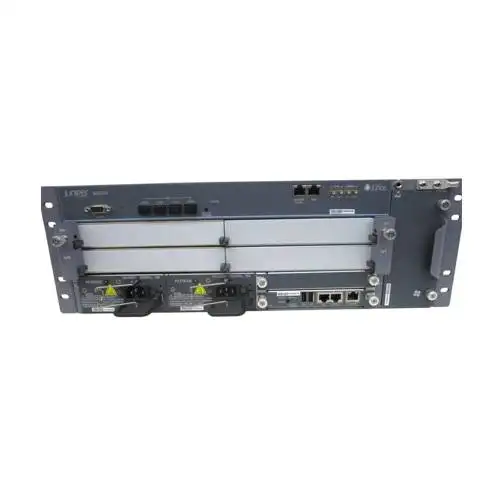
For branch, small POP, and lower-bandwidth edge roles, compact MX models like the MX5, MX10, MX40, and MX80 deliver strong forwarding performance in very little rack space. Many deployments use them as provider edge routers, small BNGs, or high-end enterprise WAN edge devices.
Aggregation & Hardened Edge: MX104, MX150 & MX204
The MX104, MX150, and MX204 slot between small edge systems and large chassis. MX104 and MX150 work well in environmentally constrained sites and multi-service aggregation roles, while MX204 brings dense 100G in a 1RU form factor that is perfect for modern metro and data center edge deployments.
Modular Chassis: MX240, MX480 & MX960
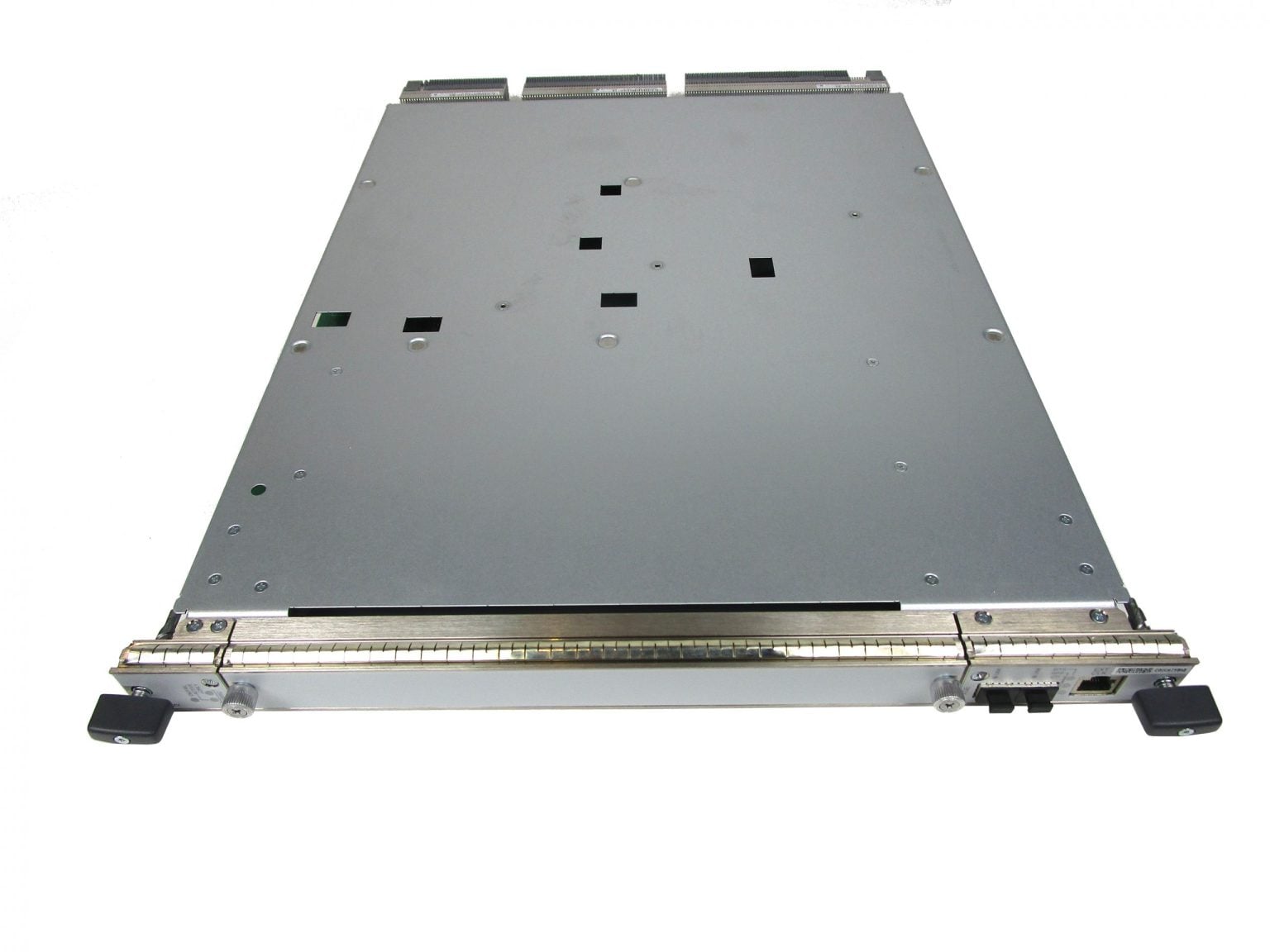
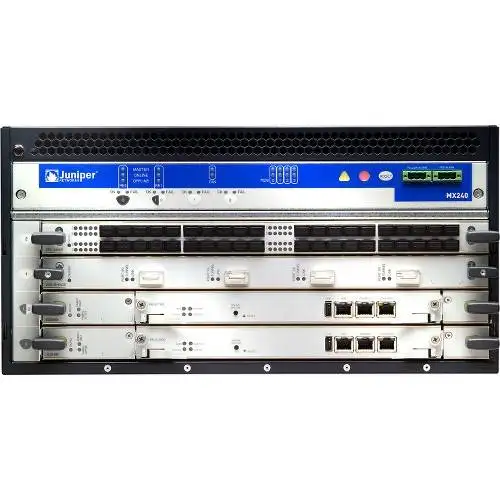
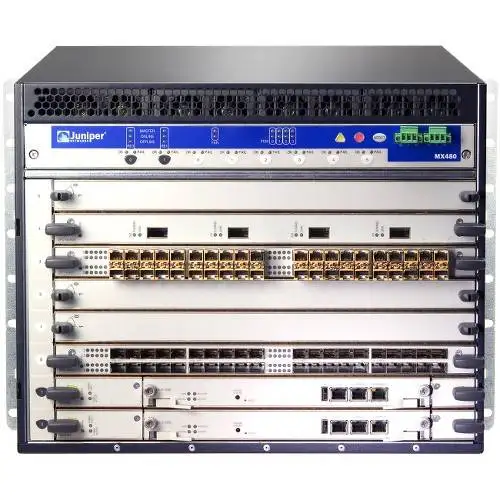
For larger POPs and core sites, the modular MX240, MX480, and MX960 support multiple MPCs and MICs, redundant routing engines, flexible AC/DC power options, and very high port densities. These chassis are common in PE, large aggregation, and core routing roles.
Newer Fixed Platforms: MX304 and Beyond
When you need newer-generation silicon with higher 100G/400G density, platforms such as the MX304 and certain MX100xx or MX2000-class systems can provide modern scale while preserving operational consistency with your existing MX fleet.
Typical MX Series Use Cases & Deployment Scenarios
Service provider PE / edge – Use MX240, MX480, or MX960 as provider edge routers terminating MPLS VPNs, Internet transit, and multi-service customer connections.
Broadband Network Gateway (BNG) – Deploy MX204, MX304, or MX480 as subscriber-facing BNG platforms with advanced QoS and policy enforcement.
Data center and cloud edge – Position MX204, MX304, or MX480 as EVPN-VXLAN gateways in front of QFX or EX leaf–spine fabrics at the data center edge.
Enterprise WAN & campus core – Standardize on smaller MX models at branch sites and MX240/MX480 at campus or regional cores to provide a consistent routing and security stack.
Managed services and carrier Ethernet – Combine fixed and modular MX models to deliver MPLS VPN, Ethernet handoff, and managed connectivity services across many sites.
Compatibility: Interface Cards, Optics, Power & Airflow
MX Series modular chassis rely on combinations of MPCs and MICs to deliver port flexibility and scale. BrightStar Systems stocks a broad range of options in our MX Series interface cards category, including high-density 10G and 100G cards.
We can help you validate:
Which MPC/MIC combinations are supported on specific MX chassis and Routing Engine (RE) versions.
AC vs DC power supply options and high-capacity fan trays for MX240, MX480, and MX960 chassis.
Optics compatibility across SFP/SFP+, QSFP/QSFP28, and CFP/CFP2 transceivers, including matching them to Juniper EX and QFX access switches.
Front-to-back vs side-to-side airflow variants to align with your data center cooling design.
Because MX hardware has a long lifecycle, planning these details up front ensures you can re-use line cards, optics, and power infrastructure as you grow, migrate, or consolidate chassis.
Lifecycle, EOL / EOS, and Long-Term Support
Many MX platforms enjoy extended lifecycles. Even after certain SKUs reach end-of-sale, Juniper typically maintains software and hardware support for years. Buying refurbished MX routers lets you align with existing deployments, avoid disruptive platform transitions, and keep spares on hand without paying new-hardware pricing.
BrightStar Systems maintains inventory of MX models that Juniper no longer offers directly, including specific MX80, MX240, MX480, and MX960 variants, as well as key spares such as fan trays, power supplies, Routing Engines, and interface cards. That makes us a practical partner for life-extension strategies, network consolidation projects, and long-term spares coverage.
Testing, Refurbishment, Warranty & Buy-Back
Every MX chassis, fixed router, and line card we sell goes through a structured multi-step process:
Detailed physical inspection for damage, corrosion, and connector integrity.
Power-on and burn-in testing using appropriate AC or DC power supplies.
Port-level verification on installed MPC/MIC combinations and key interfaces.
Environmental and sensor checks where accessible (fans, temperature, alarms).
Baseline Junos image load or secure wipe, aligned with your preferences.
All MX hardware is backed by our 1-Year In-House Warranty, with options for extended coverage on larger projects. As an independent stocking dealer, we also offer cash buy-back and trade-in for surplus MX equipment, including partial chassis, spares, and full decommissioned POPs.
If you’re consolidating older MX cores, migrating from M Series, or refreshing your POP design, we can often build a project where you trade in existing inventory toward refurbished replacements.
Frequently Asked Questions About Juniper MX Series Routers
What are the main differences between Juniper MX240, MX480, and MX960 routers?
All three are modular MX chassis built on similar architecture, but they differ in size and scale. MX240 is a compact chassis well suited to smaller POPs and enterprise cores; MX480 increases slot count, port density, and throughput for mid-size service provider and regional deployments; and MX960 offers the highest slot count and capacity for large core sites and dense edge aggregation. The Junos feature set is largely consistent, so the choice is mostly about scale, redundancy, and available rack space.
Can I mix different MPC or MIC generations in the same MX chassis?
In many cases you can, but compatibility depends on the exact MX chassis, Junos release, and MPC/MIC combination. Some older and newer cards have restrictions or require specific switch control boards or Routing Engines. When you share an inventory list, we’ll validate compatibility for your target Junos version and recommend a clean, supportable mix of cards before you purchase.
Do refurbished Juniper MX routers from BrightStar Systems support features like EVPN-VXLAN and Segment Routing?
Yes. Feature support is driven primarily by platform generation and Junos software, not by whether the hardware is refurbished. Later MX204, MX304, MX240, MX480, and MX960 configurations—paired with appropriate Routing Engines and current Junos releases—can support modern features such as EVPN-VXLAN, Segment Routing, and advanced telemetry. We’ll help you match hardware resources to the specific features you plan to enable.
What optics and interface cards are compatible with MX Series routers?
MX platforms support a wide range of SFP/SFP+, QSFP/QSFP28, and CFP/CFP2 optics, along with copper options, depending on the MPC or MIC in use. For modular systems, we map your desired port speeds to specific MPC/MIC SKUs from our MX interface card inventory, and then confirm transceiver compatibility. We can also recommend optics that match Juniper EX and QFX access switches when you are building full end-to-end designs.
How does BrightStar Systems test and refurbish MX hardware?
Our technicians visually inspect each chassis or fixed platform, test power supplies and fan trays under load, validate ports on installed line cards, and confirm stable boot and operation under Junos. Any failed components are replaced with known-good spares. Hardware is cleaned, professionally packaged, and shipped with our 1-Year In-House Warranty so you receive MX routers that are ready to deploy.
Can you help design or right-size an MX Series solution or trade in existing hardware?
Yes. Because we stock MX routers, line cards, and optics across multiple generations, we can help design edge, aggregation, or core solutions that balance performance, resiliency, and budget. We frequently build bills of materials that mix refurbished MX with Juniper EX or QFX access layers, and we can provide trade-in or buy-back options for existing MX, M Series, or other vendor gear as part of a refresh project.
Refurbished Juniper MX Series Routers
The Juniper MX Series is Juniper’s flagship family of 3D Universal Edge routers, built for high-scale service provider, cloud, and large enterprise networks. Independent ISPs, fiber-to-the-home operators, fixed-wireless providers and regional carriers run the MX204, MX240 and MX480 as their core and peering routers, and we supply the chassis, MPCs, Routing Engines and power modules that keep them in service. BrightStar Systems specializes in used and refurbished Juniper MX Series routers, from compact 1RU platforms like the MX204 to large modular chassis such as the MX480 and MX960.
Every MX platform we stock is independently sourced, fully tested, and backed by our 1-Year In-House Warranty. That combination of carrier-grade hardware and rigorous refurbishment lets you expand MX-based edge and core networks at a fraction of OEM list pricing.
This MX Series hub page is your starting point for exploring models like the MX5, MX10, MX40, MX80, MX104, MX150, MX204, MX240, MX304, MX480, and MX960.
If you’re comparing MX against other Juniper platforms, you can also browse our broader Juniper routers & switches category or the main Juniper products hub.
Juniper MX Series Overview
MX routers combine Juniper’s Trio-based forwarding plane with Junos OS to deliver high-density Ethernet, MPLS, and advanced services in a single platform. Depending on the model and line cards used, MX routers can serve as provider edge (PE) routers, broadband network gateways (BNG), data center edge gateways, or collapsed core/edge platforms for regional POPs.
BrightStar Systems focuses on proven, widely deployed MX platforms that align with modern designs, including EVPN-VXLAN, Segment Routing, L3VPN, L2VPN, and advanced QoS. That makes MX a strong fit for service providers, managed service providers, and large enterprises that want long-lived gear with a mature software stack.
Key Features & Capabilities
Scalable edge and core capacity – MX platforms span from compact fixed systems such as the MX5, MX80, MX150, and MX204 up to multi-terabit modular chassis like the MX240, MX480, and MX960.
Advanced MPLS and VPN services – MX routers support rich MPLS, L2VPN, and L3VPN capabilities along with hierarchical QoS, traffic engineering, and flexible policy tools.
EVPN-VXLAN and data center integration – Many MX platforms support EVPN-VXLAN, making them ideal DC gateways in front of Juniper QFX Series or EX Series leaf–spine fabrics.
Flexible form factors – Choose between fixed 1RU/2RU boxes (MX5, MX80, MX150, MX204, MX304) and modular chassis (MX240, MX480, MX960) to match capacity and resiliency to each site.
Rich ecosystem of MPCs, MICs, and optics – Modular MX chassis support a wide range of MPC (Modular Port Concentrators) and MIC (Modular Interface Cards) along with 1/10/25/40/100G optics, giving you a lot of freedom in port mix and scaling.
Operational consistency – Running Junos across all MX models—and alongside EX and QFX switches—simplifies operations, automation, and troubleshooting.
Popular MX Series Models We Stock
Branch & Edge: MX5, MX10, MX40 & MX80
For branch, small POP, and lower-bandwidth edge roles, compact MX models like the MX5, MX10, MX40, and MX80 deliver strong forwarding performance in very little rack space. Many deployments use them as provider edge routers, small BNGs, or high-end enterprise WAN edge devices.
Aggregation & Hardened Edge: MX104, MX150 & MX204
The MX104, MX150, and MX204 slot between small edge systems and large chassis. MX104 and MX150 work well in environmentally constrained sites and multi-service aggregation roles, while MX204 brings dense 100G in a 1RU form factor that is perfect for modern metro and data center edge deployments.
Modular Chassis: MX240, MX480 & MX960
For larger POPs and core sites, the modular MX240, MX480, and MX960 support multiple MPCs and MICs, redundant routing engines, flexible AC/DC power options, and very high port densities. These chassis are common in PE, large aggregation, and core routing roles.
Newer Fixed Platforms: MX304 and Beyond
When you need newer-generation silicon with higher 100G/400G density, platforms such as the MX304 and certain MX100xx or MX2000-class systems can provide modern scale while preserving operational consistency with your existing MX fleet.
Typical MX Series Use Cases & Deployment Scenarios
Service provider PE / edge – Use MX240, MX480, or MX960 as provider edge routers terminating MPLS VPNs, Internet transit, and multi-service customer connections.
Broadband Network Gateway (BNG) – Deploy MX204, MX304, or MX480 as subscriber-facing BNG platforms with advanced QoS and policy enforcement.
Data center and cloud edge – Position MX204, MX304, or MX480 as EVPN-VXLAN gateways in front of QFX or EX leaf–spine fabrics at the data center edge.
Enterprise WAN & campus core – Standardize on smaller MX models at branch sites and MX240/MX480 at campus or regional cores to provide a consistent routing and security stack.
Managed services and carrier Ethernet – Combine fixed and modular MX models to deliver MPLS VPN, Ethernet handoff, and managed connectivity services across many sites.
Compatibility: Interface Cards, Optics, Power & Airflow
MX Series modular chassis rely on combinations of MPCs and MICs to deliver port flexibility and scale. BrightStar Systems stocks a broad range of options in our MX Series interface cards category, including high-density 10G and 100G cards.
We can help you validate:
Which MPC/MIC combinations are supported on specific MX chassis and Routing Engine (RE) versions.
AC vs DC power supply options and high-capacity fan trays for MX240, MX480, and MX960 chassis.
Optics compatibility across SFP/SFP+, QSFP/QSFP28, and CFP/CFP2 transceivers, including matching them to Juniper EX and QFX access switches.
Front-to-back vs side-to-side airflow variants to align with your data center cooling design.
Because MX hardware has a long lifecycle, planning these details up front ensures you can re-use line cards, optics, and power infrastructure as you grow, migrate, or consolidate chassis.
Lifecycle, EOL / EOS, and Long-Term Support
Many MX platforms enjoy extended lifecycles. Even after certain SKUs reach end-of-sale, Juniper typically maintains software and hardware support for years. Buying refurbished MX routers lets you align with existing deployments, avoid disruptive platform transitions, and keep spares on hand without paying new-hardware pricing.
BrightStar Systems maintains inventory of MX models that Juniper no longer offers directly, including specific MX80, MX240, MX480, and MX960 variants, as well as key spares such as fan trays, power supplies, Routing Engines, and interface cards. That makes us a practical partner for life-extension strategies, network consolidation projects, and long-term spares coverage.
Testing, Refurbishment, Warranty & Buy-Back
Every MX chassis, fixed router, and line card we sell goes through a structured multi-step process:
Detailed physical inspection for damage, corrosion, and connector integrity.
Power-on and burn-in testing using appropriate AC or DC power supplies.
Port-level verification on installed MPC/MIC combinations and key interfaces.
Environmental and sensor checks where accessible (fans, temperature, alarms).
Baseline Junos image load or secure wipe, aligned with your preferences.
All MX hardware is backed by our 1-Year In-House Warranty, with options for extended coverage on larger projects. As an independent stocking dealer, we also offer cash buy-back and trade-in for surplus MX equipment, including partial chassis, spares, and full decommissioned POPs.
If you’re consolidating older MX cores, migrating from M Series, or refreshing your POP design, we can often build a project where you trade in existing inventory toward refurbished replacements.
Frequently Asked Questions About Juniper MX Series Routers
What are the main differences between Juniper MX240, MX480, and MX960 routers?
All three are modular MX chassis built on similar architecture, but they differ in size and scale. MX240 is a compact chassis well suited to smaller POPs and enterprise cores; MX480 increases slot count, port density, and throughput for mid-size service provider and regional deployments; and MX960 offers the highest slot count and capacity for large core sites and dense edge aggregation. The Junos feature set is largely consistent, so the choice is mostly about scale, redundancy, and available rack space.
Can I mix different MPC or MIC generations in the same MX chassis?
In many cases you can, but compatibility depends on the exact MX chassis, Junos release, and MPC/MIC combination. Some older and newer cards have restrictions or require specific switch control boards or Routing Engines. When you share an inventory list, we’ll validate compatibility for your target Junos version and recommend a clean, supportable mix of cards before you purchase.
Do refurbished Juniper MX routers from BrightStar Systems support features like EVPN-VXLAN and Segment Routing?
Yes. Feature support is driven primarily by platform generation and Junos software, not by whether the hardware is refurbished. Later MX204, MX304, MX240, MX480, and MX960 configurations—paired with appropriate Routing Engines and current Junos releases—can support modern features such as EVPN-VXLAN, Segment Routing, and advanced telemetry. We’ll help you match hardware resources to the specific features you plan to enable.
What optics and interface cards are compatible with MX Series routers?
MX platforms support a wide range of SFP/SFP+, QSFP/QSFP28, and CFP/CFP2 optics, along with copper options, depending on the MPC or MIC in use. For modular systems, we map your desired port speeds to specific MPC/MIC SKUs from our MX interface card inventory, and then confirm transceiver compatibility. We can also recommend optics that match Juniper EX and QFX access switches when you are building full end-to-end designs.
How does BrightStar Systems test and refurbish MX hardware?
Our technicians visually inspect each chassis or fixed platform, test power supplies and fan trays under load, validate ports on installed line cards, and confirm stable boot and operation under Junos. Any failed components are replaced with known-good spares. Hardware is cleaned, professionally packaged, and shipped with our 1-Year In-House Warranty so you receive MX routers that are ready to deploy.
Can you help design or right-size an MX Series solution or trade in existing hardware?
Yes. Because we stock MX routers, line cards, and optics across multiple generations, we can help design edge, aggregation, or core solutions that balance performance, resiliency, and budget. We frequently build bills of materials that mix refurbished MX with Juniper EX or QFX access layers, and we can provide trade-in or buy-back options for existing MX, M Series, or other vendor gear as part of a refresh project.