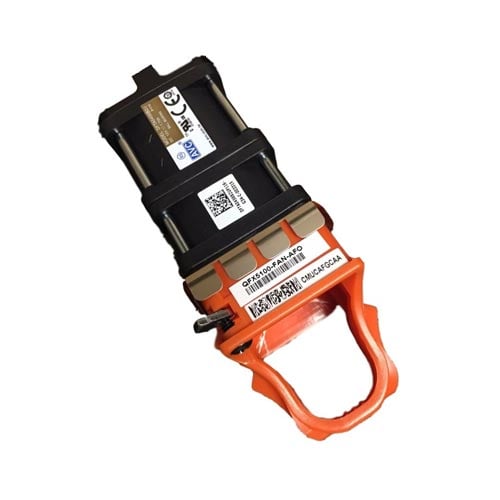
QFX5110-FANAFO Cooling Fan
The Juniper QFX5110-FANAFO is a cooling fan compatible with Juniper QFX5110 switches. This cooling fan is ideal for “front-to-back” or port-to-FRU airflow configurations. The
Juniper QFX5110-FAN-AFO Cooling Fan Module is a key accessory for Juniper QFX5110 Series Ethernet Switches, designed to maintain optimal temperature and ensure reliable performance in high-density data center environments. The
Airflow Out (AFO) model is specifically engineered to pull air from the front to the rear of the switch, enabling effective heat dissipation and maintaining consistent cooling, which is crucial for maintaining the performance and longevity of networking equipment. This fan module is an essential component for environments where airflow management is critical to prevent overheating and ensure seamless operations.
Juniper QFX5110-FANAFO Features
The QFX5110 series of network switches feature fan modules that are field-replaceable units or FRUs. Designed for seamless operation, these FRUs can be easily inserted and removed even while the device is up and running. Supporting two airflow directions, Airflow In or Airflow Out, these color-coded fan modules are strategically located between the management panel and power supplies for optimal cooling performance. And with fan module slots numbered 0 through 4, counting from left to right and featuring easy-to-identify fan icons, you’ll always know exactly how to access your cooling fans.
Juniper QFX5110-FANAFO Vs QFX5110-FANAFI
As for the Juniper QFX5110-FANOFO vs QFX5110-FANAFI, it is important to understand that these are two different fan modules for the QFX5110 switch. The QFX5110-FANOFO is designed for port-to-FRU airflow, where air comes in through vents on the end with ports and exhausts out the end with the fans, also known as front-to-back airflow. This module must be used with power supplies that have AIR OUT labels.
On the other hand, the
QFX5110-FANAFI is designed for FRU-to-port airflow, where the air comes in from the end of the switch with the fans and exhausts from the switch end with ports, also known as back-to-front airflow. This module must be used with power supplies that have AIR IN labels. It’s important to match the airflow direction of the fan modules and power supplies to ensure proper cooling and operation of the switch. Learn more about the
QFX5110-FANAFI.
All Juniper QFX5110-FANAFO cooling fans provide flexible configurations. If you need help determining which cooling fans are best for your needs, our team of network professionals can steer you in the right direction.
Features:
- Efficient Cooling – Designed to dissipate heat effectively in high-density network environments.
- Reliability – Ensures stable, continuous airflow to maintain optimal switch performance.
- Scalability – Supports the cooling needs of scalable, large-scale network environments.
- Seamless Integration – Compatible with QFX5110 switches for a smooth, easy installation.
- Energy Efficiency – Contributes to overall data center energy efficiency by ensuring the network hardware runs at a stable temperature.
Q: What does the AFO in QFX5110-FAN-AFO stand for?
A: AFO stands for “Airflow Out,” meaning the fan module is designed to pull air from the front to the rear, optimizing cooling in rack-mounted environments.
Q: Which devices are compatible with this fan module?
A: The QFX5110-FAN-AFO is compatible with the Juniper QFX5110 Series Ethernet Switches, ensuring perfect integration and cooling optimization.
Q: Is the fan module easy to replace?
A: Yes, the fan module is hot-swappable, allowing users to replace it without powering down the switch, ensuring continuous operation.
Q: Why is airflow direction important?
A: Proper airflow management is crucial in data centers and network environments to ensure that heat is effectively dissipated, preventing equipment failure due to overheating.
Q: What kind of environments is this fan module suited for?
A: It is ideal for high-density data centers or networking setups where efficient cooling is essential to maintain the reliability and performance of networking hardware.