90 Day Resell / 1 Year User
Worldwide Shipping
Mon-Fri / 8am – 5 pm PST
What happens after requesting a quote:


The NVIDIA RTX A4000 is roughly equivalent to other professional GPUs in terms of performance but stands out with its focus on professional tasks like AI, 3D rendering, and video production.
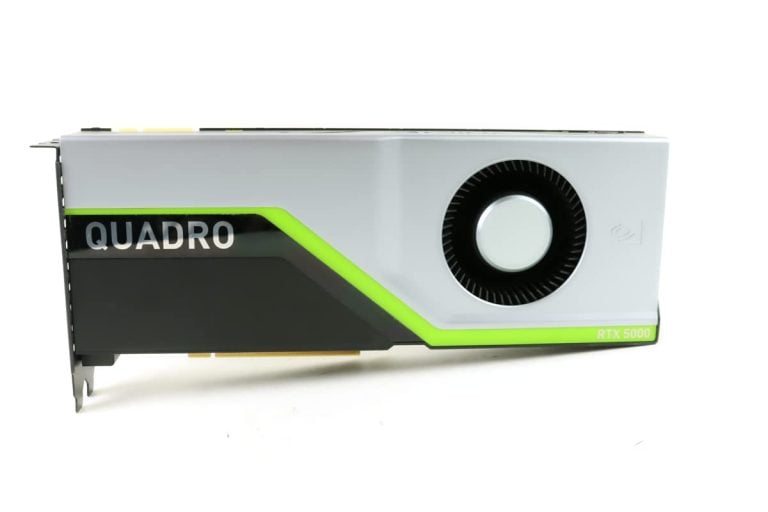
No, the RTX A4000 belongs to NVIDIA’s Ampere-based professional lineup, whereas the older RTX 4000 is part of the Quadro series.
The RTX A4000 is ideal for 3D rendering, AI workloads, video editing, architectural design, and other professional applications requiring high-performance graphics and compute power.
The NVIDIA RTX A4000 was released in April 2021.
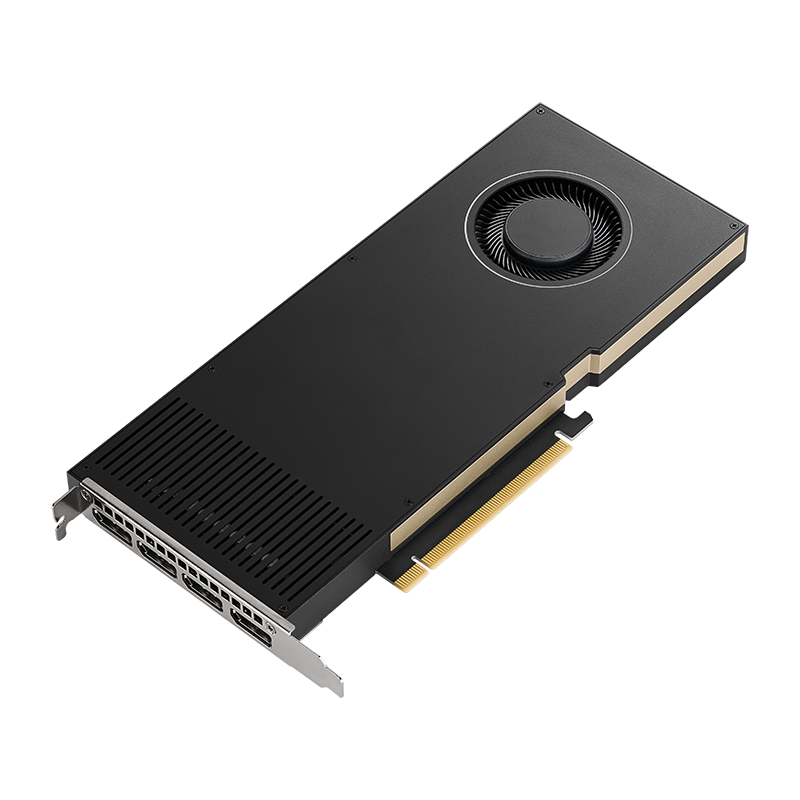
Yes, the RTX A4000 is a single-slot card, offering powerful performance in a compact form factor.
The RTX A4000 is equipped with 6,144 CUDA cores for handling complex compute and graphics tasks.
The RTX A4000 uses 140W of power, offering an excellent balance between energy efficiency and performance.
Yes, the A4000 excels in AI tasks with 192 Tensor Cores, providing up to 11X faster AI model training than previous generations.
The A4000 is used for professional tasks such as AI training, 3D rendering, architectural design, video editing, and scientific simulations.
Yes, the RTX A4000 requires external power and uses a 6-pin PCIe connector.
The NVIDIA RTX A4000 was released in April 2021.
Yes, the RTX A4000 is well-suited for video editing due to its real-time ray tracing, AV1 decoding, and high memory bandwidth.
While possible, the A4000 is designed for stability and reliability, so overclocking is uncommon in professional use cases.
The memory bandwidth of the RTX A4000 is 448 GB/s, ensuring fast data access for demanding tasks.
The RTX A4000 supports up to four 4096×2160 displays at 120Hz or two 7680×4320 displays at 60Hz.
The maximum thermal design power (TDP) for the RTX A4000 is 140W.
The RTX A4000 offers 19.2 TFLOPS of single-precision performance, delivering high speeds for tasks like 3D rendering, AI training, and simulations.
The RTX A4000 uses a single 6-pin PCIe power connector.
The RTX A4000 is designed for professionals in fields like AI, machine learning, 3D rendering, architecture, and video production, offering high-performance computing and graphics capabilities.
The A4500 has more CUDA cores (7168 vs. 6144) and larger memory (20GB vs. 16GB) for demanding professional applications, while the A4000 provides strong performance for professionals at a lower cost.
The A2 is designed for lightweight AI inferencing tasks, whereas the A4000 offers more memory and CUDA cores, making it suitable for heavier workloads like 3D rendering, AI model training, and video editing.
The A2000 is less powerful with fewer CUDA cores and memory (12GB vs. 16GB), suitable for lighter tasks, while the A4000 excels in more resource-intensive tasks like rendering and machine learning.
The A5000 has more CUDA cores and memory (24GB vs. 16GB), making it better suited for large-scale professional tasks. The A4000 remains a strong choice for users needing high performance with lower power consumption.
The RTX A4000 is an upgrade from the Quadro RTX 4000, featuring twice the memory, more CUDA cores, and support for NVIDIA’s Ampere architecture for enhanced professional workflows.
The A4000 features more CUDA cores (6144 vs. 4096) and greater memory capacity (16GB vs. 12GB), making it more efficient for complex tasks like AI, rendering, and high-performance computing.
The T1000 is a lower-tier GPU with fewer CUDA cores and less memory, making the A4000 the superior choice for demanding professional tasks like 3D modeling and machine learning.