90 Day Resell / 1 Year User
Worldwide Shipping
Mon-Fri / 8am – 5 pm PST
What happens after requesting a quote:


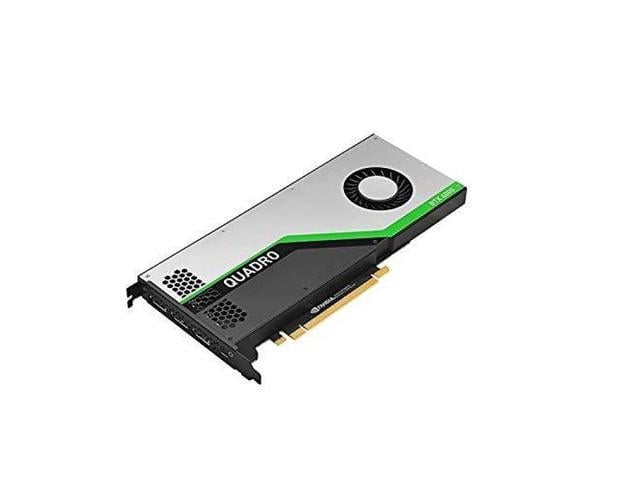
The NVIDIA Quadro RTX 4000 revolutionizes professional graphics with its powerful performance and cutting-edge technology. Designed for professionals across various industries, it integrates NVIDIA’s Turing architecture and RTX™ technology, excelling in rendering, simulation, and AI-driven workflows. As part of the RTX 4000 series, this single-slot GPU strikes a perfect balance between power, efficiency, and scalability, making it a valuable asset for demanding professional environments.
The NVIDIA Quadro RTX 4000 is equipped with 8 GB of GDDR6 memory, delivering up to 416 GB/s of bandwidth. This high-speed memory handles memory-intensive tasks such as 3D modeling, rendering, and processing large datasets. With a 256-bit memory interface, it ensures smooth multitasking, making it an excellent choice for professionals working with high-resolution textures and data-rich projects. Whether you’re managing complex architectural designs or multi-layered video projects, the RTX 4000 series offers the speed and capacity needed for peak performance.
With PCI Express 3.0 x16 connectivity, the Quadro RTX 4000 GPU ensures fast and efficient data transfer between the GPU and host system. This high-throughput capability minimizes latency, delivering real-time responsiveness in applications like virtual reality (VR), simulations, and real-time rendering. Additionally, the RTX 4000 series supports VirtualLink™, enabling seamless integration with next-generation head-mounted displays for immersive VR experiences.
The NVIDIA Quadro RTX 4000 combines powerful performance with energy-efficient design, consuming just 125 W of total graphics power. Its single-slot form factor reduces power and thermal demands, making it an ideal choice for compact workstations. By minimizing energy usage without sacrificing performance, the RTX 4000 helps support sustainable computing practices, lowering energy costs and reducing environmental impact.
Designed for professional workstations, the Quadro RTX 4000 features a compact single-slot form factor (4.4” H x 9.5” L). Its space-saving design ensures compatibility with a wide range of workstation setups while maintaining optimal thermal performance. Whether you’re an architect, engineer, designer, or AI developer, the RTX 4000 delivers high performance while fitting seamlessly into space-constrained environments.
The NVIDIA Quadro RTX 4000 is certified for use with a wide array of professional software applications across industries like architecture, engineering, construction (AEC), digital content creation (DCC), and artificial intelligence (AI). Applications such as Autodesk, Adobe Creative Cloud, and Dassault Systèmes run smoothly, thanks to NVIDIA’s rigorous certification process. Global support ensures reliability and seamless integration, allowing professionals to focus on their work without technical disruptions.
Benchmarking reveals that the NVIDIA Quadro RTX 4000 is a powerful mid-range professional GPU. It outperforms its predecessor, the Quadro P4000, delivering significant advancements in ray tracing and AI capabilities. While models like the RTX A2000 cater to lighter workloads, the RTX 4000 remains the superior choice for demanding applications. Its successor, the RTX A4000 from the NVIDIA Ampere architecture, offers even greater performance, making it ideal for those adopting cutting-edge technologies.
The Quadro RTX 4000 offers exceptional value for professionals seeking robust performance without investing in ultra-high-end GPUs. Features like real-time ray tracing, AI acceleration, and VR readiness make it a cost-effective solution for users across multiple industries. This combination of affordability and capability ensures the RTX 4000 is an investment in productivity and innovation.
At the heart of the Quadro RTX 4000 is NVIDIA RTX technology, which combines advanced ray tracing, AI acceleration, rasterization, and simulation capabilities. This transformative technology enables professionals to create photorealistic visuals, automate workflows, and simulate real-world environments with unprecedented speed and accuracy.
The Quadro RTX 4000 is powered by NVIDIA’s groundbreaking Turing architecture, marking a significant leap forward in GPU technology. Turing integrates real-time ray tracing, AI acceleration, and enhanced rasterization, reimagining professional graphics capabilities.
The Quadro RTX 4000 excels across various industries, offering tailored solutions for professionals:
The NVIDIA RTX 4000 offers an exceptional price-to-performance ratio, making it a solid choice for professionals who need powerful GPU performance without breaking the bank. The combination of real-time ray tracing, AI capabilities, and VR readiness offers incredible value for industries ranging from machine learning to digital content creation.
The NVIDIA Quadro RTX 4000 empowers professionals to push creative and technical boundaries. Combining Turing architecture with NVIDIA RTX technology, it delivers real-time ray tracing, AI acceleration, and lifelike simulations. Whether you’re designing architectural masterpieces, creating stunning visual effects, or solving complex AI challenges, the RTX 4000 is a reliable and powerful tool for turning vision into reality.
The NVIDIA Quadro RTX 4000 is ideal for professionals in architecture, engineering, and construction (AEC), digital content creation (DCC), and artificial intelligence (AI). It excels in rendering, 3D modeling, and simulation workflows, making it perfect for industries requiring high-performance, real-time processing and precision graphics. NVIDIA RTX technology combines real-time ray tracing, AI acceleration, and enhanced rasterization. This enables the creation of photorealistic visuals, lifelike simulations, and automation of workflows, allowing professionals to work faster and with greater accuracy across various industries. Yes, the Quadro RTX 4000’s single-slot design and energy-efficient architecture make it perfect for compact workstations. Its form factor ensures compatibility with space-constrained setups while maintaining optimal thermal performance, making it a versatile choice for professionals. The Quadro RTX 4000 consumes only 125 W of power, combining high performance with energy efficiency. Its design reduces thermal demands and energy costs, supporting sustainable computing while maintaining robust performance for demanding workloads. The NVIDIA Quadro RTX 4000 is roughly equivalent to the GeForce RTX 2070 in terms of performance but is optimized for professional workloads like 3D rendering, AI tasks, and CAD applications, offering superior reliability and certified software support for industry-standard applications. The NVIDIA Quadro RTX 4000 was released in late 2018. Despite its age, it remains a strong contender in the professional graphics market due to its robust performance and advanced features like ray tracing and AI acceleration. The Quadro RTX 4000 is a professional graphics card from NVIDIA, built on the Turing architecture. It features real-time ray tracing, AI acceleration, and 8 GB of GDDR6 memory, making it ideal for industries such as architecture, engineering, and digital content creation. Quadro cards like the RTX 4000 are designed for professional use, offering certified drivers, precision-focused performance, and enhanced stability. They are tailored for CAD, rendering, and simulation, whereas GeForce cards focus on gaming and consumer-grade applications. The Quadro RTX 4000 delivers up to 7.1 teraflops of FP32 performance, making it capable of handling demanding workloads such as 3D modeling, simulation, and real-time ray tracing with efficiency and speed. The Quadro RTX 4000 features 2,304 CUDA cores, which are optimized for parallel processing tasks in professional applications like rendering, AI development, and large-scale simulations. The choice between Quadro and RTX depends on the use case. Quadro cards are better for professional workloads requiring certified drivers and precision, while RTX GeForce cards are tailored for gaming and general consumer use. NVIDIA has rebranded its professional graphics lineup, moving away from the Quadro name. New professional GPUs, such as the RTX A4000, retain the same focus on professional applications but fall under the NVIDIA RTX branding. The Quadro RTX 4000 supports up to four monitors simultaneously, thanks to its three DisplayPort 1.4 connectors and one VirtualLink port, enabling versatile multi-display setups for professional environments. Yes, the Quadro RTX 4000 features real-time ray tracing capabilities through its dedicated RT cores, allowing for photorealistic lighting and shadows in applications like 3D rendering and VR environments. The Quadro RTX 4000 supports resolutions up to 7680 x 4320 pixels (8K) at 60 Hz, providing exceptional clarity for demanding visual tasks such as video editing and architectural design. While the Quadro brand has been replaced by NVIDIA’s RTX A-series, Quadro GPUs like the RTX 4000 are still relevant due to their robust performance and professional-grade features. The RTX 4000 significantly outperforms the A2000 with its 8 GB of GDDR6 memory, superior processing power, and enhanced capabilities for tasks like 3D rendering and AI applications. The A2000, with 6 GB of memory, is a more affordable option for entry-level CAD and design work, but the RTX 4000 is better for demanding professional applications that require more graphical power. The A4000 provides more memory with 16 GB of GDDR6, allowing for superior performance in demanding applications like high-end rendering, simulations, and large-scale data analysis. While the RTX 4000 is a great performer for moderate tasks, the A4000’s extra memory and power make it the better choice for professionals requiring advanced graphics and multi-tasking capabilities. The Quadro RTX 4000 offers newer Turing architecture with support for real-time ray tracing, AI enhancements, and increased memory capacity (8 GB GDDR6), making it ideal for demanding 3D rendering and simulations. The P4000, though still powerful with 8 GB GDDR5 memory, lacks ray-tracing and AI support, limiting its performance for next-gen workloads. The RTX 5000 outperforms the RTX 4000 in multiple areas, offering more memory (16 GB GDDR6) and more CUDA cores, making it better suited for large-scale simulations, 3D rendering, and AI-based tasks. The RTX 4000, while highly capable, is better for mid-range professional workloads but lags behind in power for more complex datasets and workflows. The RTX 4000 offers more memory (8 GB GDDR6) and increased CUDA cores compared to the RTX A2000’s 6 GB, making it better suited for complex design, rendering, and AI tasks. The A2000, however, is ideal for lighter workloads such as CAD and 3D modeling, where its lower power and price are a benefit without sacrificing too much performance. The RTX A4000 features 16 GB of GDDR6 memory, significantly outperforming the RTX 4000’s 8 GB in tasks requiring larger datasets, like advanced rendering, AI, and simulations. The A4000 is a better option for professionals working with large-scale models, while the RTX 4000 is suitable for less demanding applications but is still a powerful solution for standard workflows. The RTX 4000 offers a significant boost in memory, CUDA cores, and advanced features like ray tracing compared to the P2000. With 8 GB of GDDR6 memory, the RTX 4000 excels at modern, graphics-intensive applications like 3D rendering, AI, and simulations, while the P2000, with only 5 GB of GDDR5, is more suitable for older CAD and visualization tasks with lower demands. The P5000, with 16 GB of GDDR5 memory, is a powerful card for graphics and CAD tasks but lacks the advanced features of the RTX 4000, such as real-time ray tracing and AI acceleration. The RTX 4000, powered by Turing architecture, supports these advanced capabilities with 8 GB of GDDR6 memory, making it the better choice for modern workloads requiring enhanced graphics and real-time processing. The RTX 4000 outshines the Quadro P2000 with its newer architecture, 8 GB of GDDR6 memory, and support for ray tracing and AI applications. While the P2000 is still effective for less demanding CAD and 3D visualization tasks, the RTX 4000 is a much better choice for modern professional workloads that require higher graphics power, faster processing, and real-time rendering capabilities. The RTX 4000 surpasses the Quadro RTX 3000 in memory and processing power, offering 8 GB of GDDR6 memory compared to the RTX 3000’s 6 GB GDDR6. The RTX 4000 is better suited for more demanding applications, such as high-end 3D rendering and complex simulations, while the RTX 3000 remains ideal for moderate professional workflows and tasks with less memory and graphical complexity. The RTX A4000 features 16 GB of GDDR6 memory, significantly outmatching the RTX 4000’s 8 GB for larger datasets, complex simulations, and high-end rendering tasks. The RTX 4000, with its 8 GB memory, is still a powerful option for standard professional tasks but falls short when compared to the A4000’s higher memory capacity and performance for more demanding workflows.