
90 Day Resell / 1 Year User
Worldwide Shipping
Mon-Fri / 8am – 5 pm PST
What happens after requesting a quote:


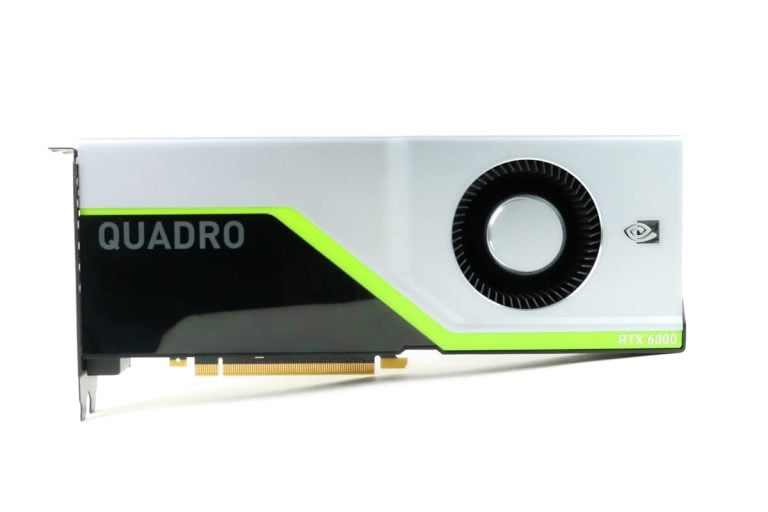
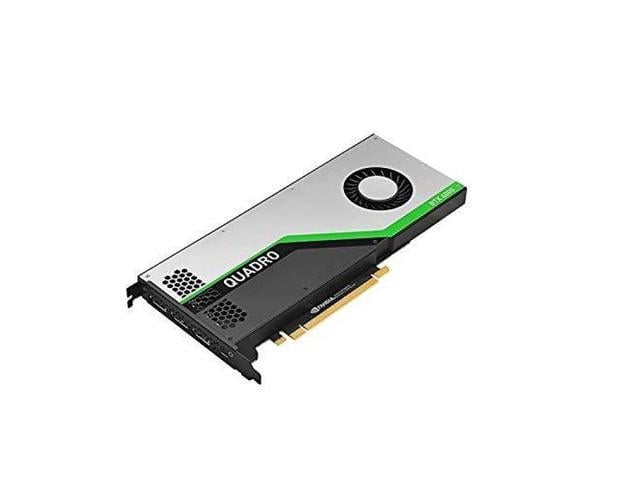
The RTX 5000 combines a powerful Turing architecture, 3,072 CUDA Cores, and 16 GB of GDDR6 memory, making it ideal for complex workflows such as 3D rendering, AI development, and virtual reality applications. The Quadro RTX 5000 is designed for professionals working in fields like 3D rendering, video editing, CAD applications, virtual reality, AI development, and scientific simulations. It offers advanced features such as real-time ray tracing, AI acceleration, and high-resolution visualization. The NVIDIA Quadro RTX 5000 was released in August 2018 as part of NVIDIA’s Turing-based Quadro RTX lineup. While NVIDIA has transitioned from the Quadro branding to the RTX A-Series for professional GPUs, existing Quadro models like the RTX 5000 remain relevant and widely used. Support and availability vary by region and retailer. Quadro RTX GPUs are expensive because they are built for precision, stability, and reliability in professional environments. They include features like certified drivers, ECC memory, and optimizations for specialized software, which are critical for enterprise workflows. Yes, the RTX 5000 is VR-ready and features 576 Tensor Cores, enabling real-time ray tracing, deep learning, and AI-enhanced workflows. It also supports VirtualLink (USB-C) for seamless VR headset connectivity. The Quadro RTX 5000 has a TDP (Thermal Design Power) of 265W, ensuring reliable performance in power-intensive tasks. Yes, the RTX 5000 supports NVLink, allowing multiple GPUs to work together for increased performance, memory pooling, and scalability in demanding projects. Quadro GPUs are optimized for professional applications, offering enhanced driver stability, precision, ECC memory, and certifications for software like AutoCAD, SolidWorks, and Adobe Creative Suite. GeForce GPUs focus more on gaming and consumer-grade performance. The RTX 5000 Ada is optimized for professional workflows with features like ECC memory and certified drivers, while the RTX 4090 focuses on gaming and raw computational power. The 4090 outperforms in general speed but lacks the professional certifications of the RTX 5000 Ada. The Quadro RTX 5000 is tailored for professionals with features like ECC memory and certified drivers, while the RTX 3080 is a gaming powerhouse offering higher raw performance but without professional-grade stability and optimizations. The RTX 5000 significantly outperforms the older Quadro P5000 with its Turing architecture, more CUDA Cores, and advanced features like real-time ray tracing and Tensor Cores, making it ideal for modern professional workflows. The RTX 5000 offers higher performance with more CUDA, Tensor, and RT Cores compared to the RTX 4000, making it better suited for demanding tasks like 3D rendering and AI applications. The RTX 3060 delivers higher clock speeds and CUDA Cores for general performance, but the RTX 5000 provides professional features like ECC memory, driver certifications, and superior ray tracing capabilities for enterprise use. The RTX 3090 offers significantly higher performance and memory capacity for raw computational tasks, but the Quadro RTX 5000 excels in professional applications with its optimized drivers and enterprise-grade features. The RTX 5000 outclasses the P5200 with its advanced Turing architecture, real-time ray tracing, and Tensor Cores, making it far superior for modern rendering and AI workloads. The RTX 3070 provides better raw performance for gaming and general computing, but the RTX 5000 offers professional-grade features like ECC memory, certified drivers, and optimized performance for enterprise applications. The 2080 Ti is faster in gaming and general tasks, but the Quadro RTX 5000 provides enterprise-grade reliability, application certifications, and support for professional workflows. The RTX 2070 is designed for gaming and lacks the professional optimizations of the Quadro RTX 5000, which is better suited for CAD, AI development, and 3D rendering tasks. The RTX 2060 offers better value for gaming and casual tasks, but the Quadro RTX 5000 is superior for professional environments, with features like ECC memory and certified drivers. While the RTX 2080 is faster for gaming and general tasks, the Quadro RTX 5000 is better suited for professional workflows, offering greater stability, precision, and application certifications.